Accessible Bathroom Modifications London: The 2026 Guide to Safer Living
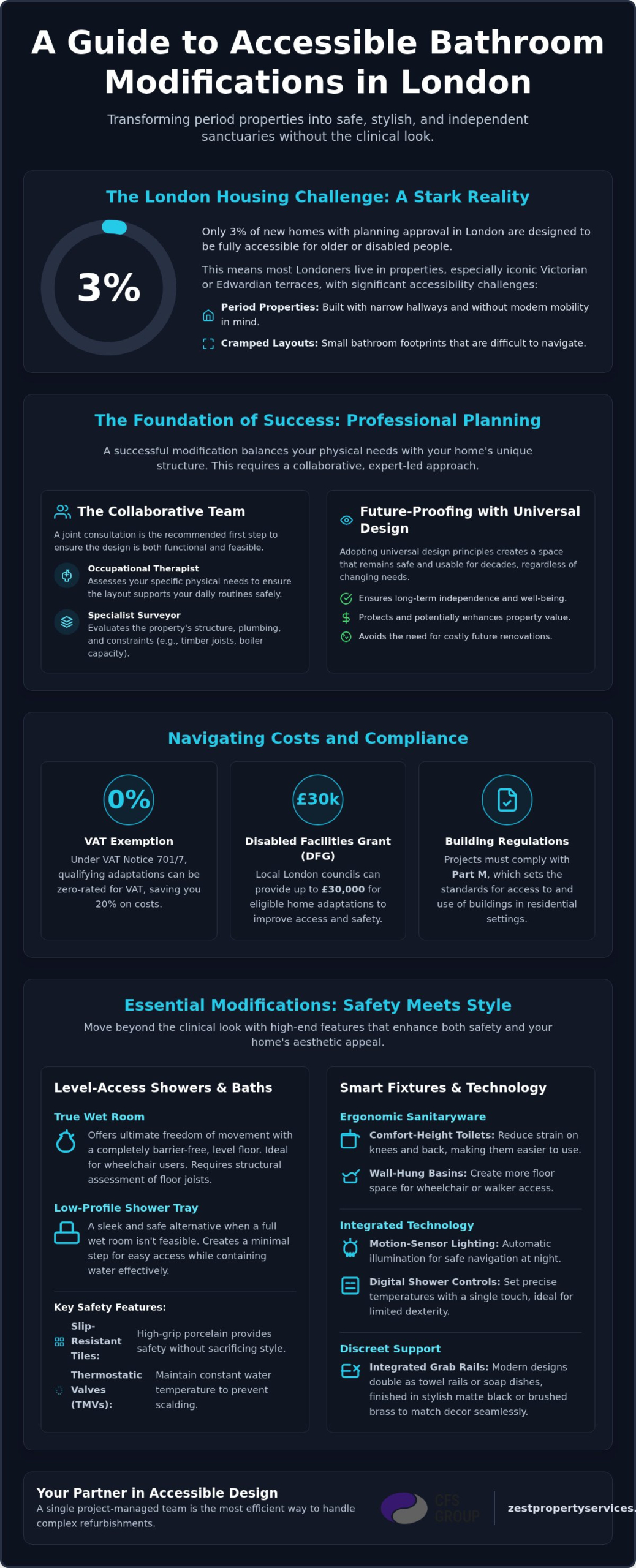
Did you know that just 3% of new homes granted planning approval in London are designed to be truly accessible for older or disabled people? For many living in the capital’s iconic Victorian or Edwardian terraces, the challenge of navigating a cramped, outdated bathroom is a daily reality. You might worry that making necessary changes will turn your stylish home into something that looks like a hospital ward, or perhaps you’re confused by the complex rules surrounding VAT exemptions and grants. We understand that you want to maintain your property’s value while securing your independence.
The good news is that accessible bathroom modifications London residents can feel proud of are entirely possible with the right approach. You don’t have to choose between safety and aesthetics. In this 2026 guide, we’ll show you how to transform your space into a modern, high-quality sanctuary that meets your needs perfectly. We’ll explore clever layout solutions for tight spaces, explain how you could save money with 0% VAT on adaptations, and provide the clarity you need to plan a stress-free refurbishment that lasts a lifetime.
Key Takeaways
- Learn why London’s period properties require a bespoke planning approach involving both an Occupational Therapist and a specialist surveyor.
- Discover how to choose between wet rooms and low-profile trays based on your specific floor structure and design preferences.
- Explore how accessible bathroom modifications London can be designed as high-end spa features to enhance your home’s aesthetic.
- Find out why a single project-managed team is the most efficient way to handle complex refurbishments in London’s unique building stock.
- Gain insights into future-proofing your home to ensure long-term independence without compromising on property value or style.
Planning Your Accessible Bathroom Modification in London
Planning a renovation in the capital requires more than just a keen eye for design. Most London homes, particularly those charming Victorian terraces and Edwardian villas, weren’t built with modern mobility in mind. Narrow hallways and tight footprints make accessible bathroom modifications London a unique engineering puzzle. We don’t see these as obstacles. Instead, the Zest approach blends professional reliability with an energetic, solution-oriented mindset to ensure your home remains a sanctuary of independence. We focus on creating a space that feels fresh and vital, rather than clinical.
We always recommend starting with a joint consultation between an Occupational Therapist and a specialist surveyor. This partnership ensures the layout doesn’t just look good but actually functions for your specific physical needs. By following universal design principles, we help you future-proof your property. This proactive strategy means your bathroom stays safe and usable for decades, protecting both your well-being and your property’s long-term value.
Assessing Space and Plumbing Constraints in London Homes
Small bathrooms are a London staple. To maximise floor space for wheelchairs or walkers, we often look at wall-hung fixtures and outward-opening or pocket doors. We also evaluate your existing hot water system. A high-flow walk-in bath requires a robust setup, so you might want to consult our boiler installation London guide to ensure your current unit can handle the increased demand. For wet room conversions, our team carefully assesses timber joists in older properties to ensure the floor is properly reinforced and waterproofed before work begins.
Understanding Building Regulations and VAT Exemptions
Compliance is key to a successful project. We guide you through Part M of the Building Regulations, which sets the standard for access and use of buildings in private residential settings. Financial relief is also available for those who need it most. Under VAT Notice 701/7, you might qualify for a 0% VAT rate on your accessible bathroom modifications London, which can save you thousands of pounds. Additionally, we can help you understand the process for the Disabled Facilities Grant (DFG), where local London councils provide up to £30,000 for eligible home adaptations.
Essential Modifications for Safety, Independence, and Style
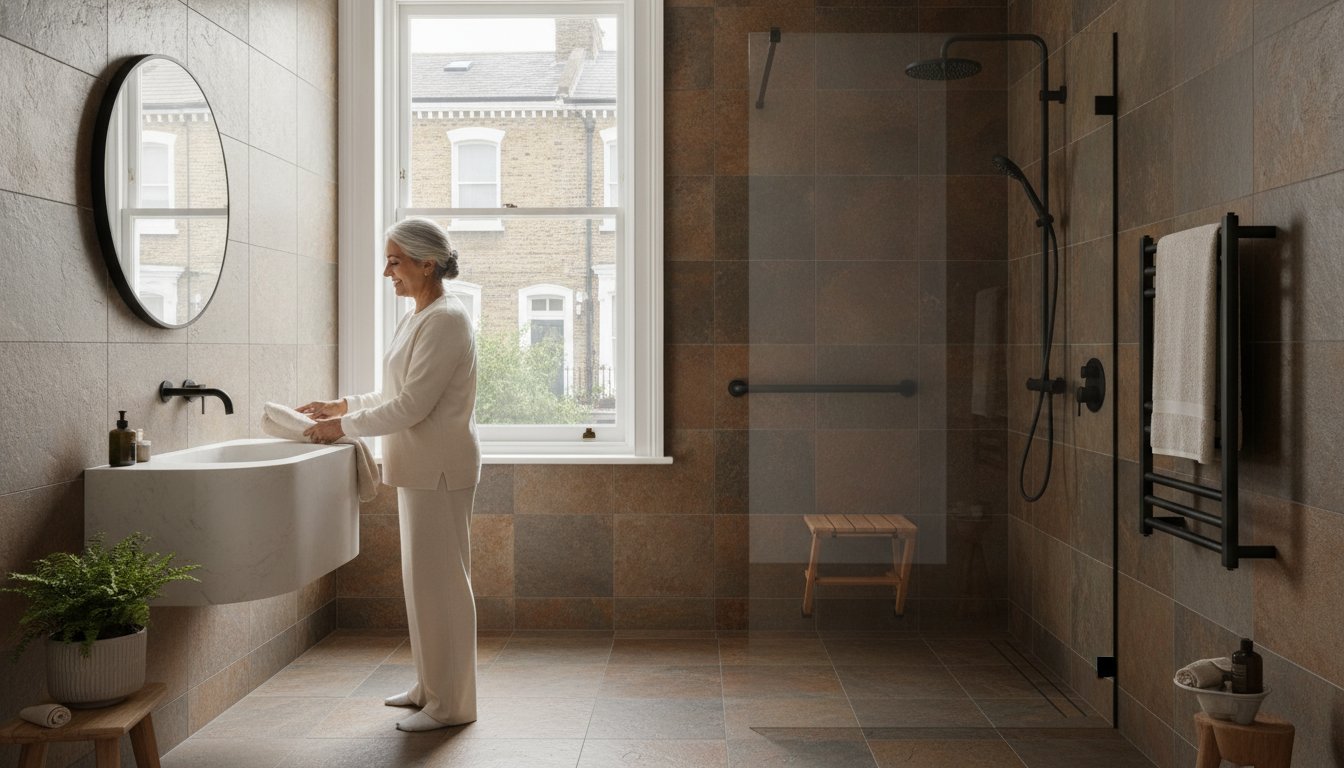
Choosing the right hardware is where your vision takes shape. Modern accessible bathroom modifications London residents opt for today focus on blending functionality with high-end aesthetics. We move away from the clinical "hospital" look by selecting fixtures that wouldn’t look out of place in a boutique hotel. For instance, integrated grab rails can now double as stylish towel heaters or soap dishes, finished in brushed brass or matte black to match your decor. This ensures your investment in accessible bathroom modifications London actually adds to your home’s appeal whilst providing the support you need.
Level-Access Showers and Walk-In Bath Solutions
A "true" wet room offers the ultimate freedom of movement. It removes all barriers, making it ideal for wheelchair users and those with limited mobility. However, if your London home’s timber joists aren’t suited for a full wet room, a low-profile shower tray provides a sleek, safe alternative. We combine these with slip-resistant porcelain tiles that provide grip without sacrificing style. Safety is further enhanced by Thermostatic Mixing Valves (TMVs), which maintain a constant water temperature to prevent scalding. If you are exploring funding for these upgrades, the official guidance on Disabled Facilities Grants (DFGs) is an excellent starting point for understanding available support.
Sanitaryware and Smart Technology Integration
Comfort-height toilets and wall-hung basins are transformative. Elevating these fixtures reduces strain on joints and creates a sense of space in smaller London bathrooms. We also integrate smart technology to assist those with limited dexterity. Motion-sensor lighting ensures you never have to fumble for a switch in the dark; digital shower controls allow you to set the perfect temperature with a single touch. Because safety is our priority, all our electrical work meets NICEIC standards. This is particularly important when adding new powered features, and we can provide the necessary EICR certificates to confirm your home’s electrical safety. Our dedicated refurbishment team ensures every detail is handled with precision.
The CFS Group Professional Installation Process
Many homeowners find the prospect of a renovation daunting because they have to coordinate between separate plumbers, electricians, and tilers. This often leads to miscommunication and frustrating delays. We eliminate that stress by providing a comprehensive "one-stop shop" service. Our team handles every aspect of your accessible bathroom modifications London project in-house. With over 15 years of experience across the capital and the South East, we’ve refined a process that prioritises your comfort and delivers high-quality results without the usual refurbishment headaches.
From Initial Strip-Out to Final Decoration
The journey begins with a meticulous strip-out. This stage is vital for spotting hidden structural or plumbing issues before they become expensive problems. Once the foundations are ready, we move into the installation phase. Our Gas Safe engineers and NICEIC-standard electricians work in tandem to ensure every feature is safe and functional. However, a bathroom isn’t truly finished until it looks beautiful. Our professional decorators provide a flawless finish that matches your existing interior painting and overall home style. Following NHS guidance on home adaptations ensures that your new environment supports both your physical safety and your mental well-being. We conclude with a thorough handover, making sure you feel completely confident using your new space.
Why Choose a Local London Expert?
Navigating the specific building challenges of London requires local expertise. We understand the nuances of different borough councils and the unique plumbing stock found in period properties. Choosing a local partner means you get a dedicated team that takes pride in its community-focused service. You’ll have peace of mind knowing that every member of our team is a vetted professional, committed to transparency and punctuality. We manage the disruption carefully to keep your home functional whilst we work. Ready to transform your space? Contact CFS Group Limited for a consultation and take the first step toward a safer, more stylish home.
Secure Your Independence with a Modern Bathroom Transformation
Transforming your home shouldn’t be a source of stress. By focusing on bespoke planning and high-quality fixtures, you can create a space that is both safe and exceptionally stylish. You’ve seen how smart technology and clever layouts solve the challenges of London’s unique housing stock whilst maintaining property value. The key to a successful renovation lies in professional execution and a clear understanding of your long-term needs.
With over 15 years of experience, our team provides the full project management you need for a seamless transition. We employ Gas Safe registered engineers and ensure all work meets NICEIC standards, so you don’t have to worry about safety or compliance. When you trust us with your accessible bathroom modifications London, we handle everything from the initial strip-out to the final, professional decoration. It’s time to enjoy the tranquility and independence you deserve in a home that truly works for you.
Ready to start your journey? Book Your Accessible Bathroom Consultation with CFS Group Limited today. Let’s work together to build a future-proof sanctuary that brings you peace of mind for years to come.
Frequently Asked Questions
Do I need planning permission for accessible bathroom modifications in London?
Generally, you don’t need planning permission for internal accessible bathroom modifications in London unless your property is a listed building or you are making significant structural changes to the building’s footprint. Most adaptations fall under "permitted development." However, you should always check with your local borough council if you live in a conservation area, as specific restrictions may apply to plumbing vents or window alterations.
How much VAT can I save on my disabled bathroom installation?
You can save the full 20% by qualifying for a 0% VAT rate on the supply and installation of qualifying goods and services. This relief applies if the bathroom is being adapted for a person with a long-term illness or disability for their domestic use. You’ll simply need to sign a self-declaration form to confirm eligibility, which significantly reduces the overall cost of high-quality adaptations.
How long does a typical accessible bathroom refurbishment take to complete?
A typical refurbishment usually takes between 10 to 14 working days from the initial strip-out to the final handover. This time frame includes all plumbing, electrical work, tiling, and decoration. We organise our schedule to ensure your home remains as functional as possible whilst we work. Complex projects involving structural reinforcements for accessible bathroom modifications London period homes might take slightly longer, but we provide a clear timeline upfront.
Can you make a very small Victorian bathroom wheelchair accessible?
Yes, we can often make small Victorian spaces accessible by converting them into full wet rooms. By removing the bath and installing a level-access floor, we maximise the available turning circle for a wheelchair. Wall-hung basins and compact, comfort-height toilets also help free up vital floor space. These clever design choices prove that even the tightest London layouts can become safe and functional without losing their charm.
What is the difference between a wet room and a walk-in shower?
The main difference lies in the floor structure. A wet room is a completely waterproofed space where the shower floor is level with the rest of the room, allowing for total freedom of movement. A walk-in shower typically features a very low-profile tray that you step onto. Whilst both are safer than a traditional tub, wet rooms are generally superior for wheelchair users because they eliminate all thresholds.
Are there grants available in London for bathroom modifications?
Yes, the primary source of funding is the Disabled Facilities Grant (DFG), which provides up to £30,000 for home adaptations in England. This grant is means-tested for adults and applied for through your local London council. Additionally, for smaller jobs under £1,000 such as grab rail installations, some councils offer non-means-tested minor adaptations grants. We recommend contacting your local social services department to arrange an initial Occupational Therapist assessment.